
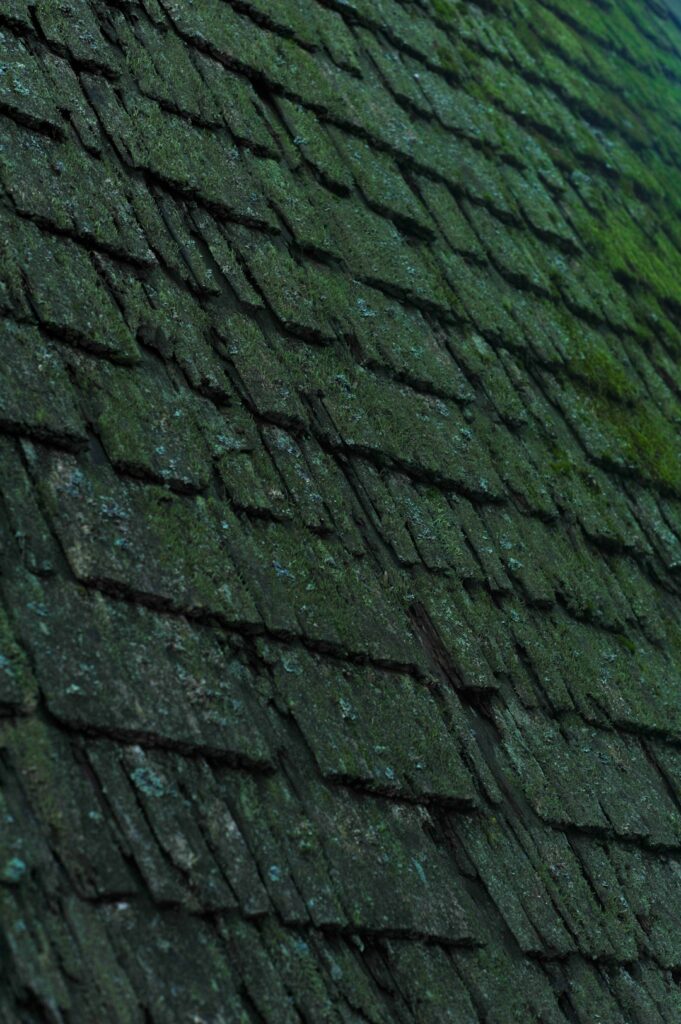
What does roof cleaning involve?
Roof cleaning means removing leaves, branches, dirt, algae, moss, and other buildup without damaging the roofing material or creating a fall hazard. For most homes, the safest approach is to work from the ground or from a securely positioned ladder for limited edge cleaning rather than walking across the roof.
A roof does not need to look perfectly new to be healthy. Light discoloration may be cosmetic, while thick moss, trapped leaves, blocked drainage, or damaged shingles can contribute to moisture problems. The cleaning method should match the roof’s material, slope, age, and condition.
In Ontario, NY, seasonal moisture, freeze-thaw cycles, wind, and snow can leave organic debris in valleys, around chimneys, behind roof equipment, and near gutters. These areas deserve attention because trapped debris can hold moisture against shingles and interfere with drainage.
Is it safe to clean a roof yourself?
It can be reasonable to remove reachable debris from the ground or clean gutters from a properly set ladder. Walking on a sloped roof is much more hazardous, especially when the surface is damp, frosty, moss-covered, or brittle with age.
Do not climb onto the roof if any of these conditions exist:
- The roof is steep, wet, icy, or visibly unstable.
- Shingles are cracked, curled, loose, or missing.
- The roof has heavy moss or algae that makes footing unreliable.
- You cannot maintain three points of contact while using a ladder.
- The work requires stepping near skylights, roof edges, valleys, or overhead utility lines.
- You do not have appropriate fall-protection equipment and training.
A fall from a residential roof can cause severe injury even when the roof is only one story. A ladder is not a substitute for a complete fall-protection plan when roof access or roof walking is necessary.
What should be done before cleaning?
Inspect the roof from the ground first. Use binoculars if needed rather than climbing up for a closer look. Look for dark streaks, green moss, piles of leaves, damaged flashing, sagging areas, exposed underlayment, and gutters that appear to overflow.
Choose a dry, calm day with mild temperatures. Avoid cleaning before rain, during strong wind, or when overnight temperatures may create ice. Wet shingles become slippery, and cleaning solutions can be carried by runoff into planting beds, ponds, storm drains, or neighboring property.
Before using water or a cleaning solution:
- Cover or wet nearby plants with clean water.
- Move outdoor furniture and toys away from the runoff path.
- Close windows and protect exterior electrical components.
- Keep children and pets away from the work area.
- Confirm that gutters and downspouts can carry the water away.
Never mix bleach with ammonia, acids, or other cleaners. Chemical reactions can create dangerous vapors. Product labels should be followed exactly, including dilution, protective equipment, and disposal instructions.
How can leaves and loose debris be removed safely?
Loose leaves and small twigs can often be removed without stepping on the roof. A soft roof rake designed for the task may help from ground level, but it should be used gently and pulled downward rather than forced upward under shingles.
Avoid using a pressure washer, stiff broom, garden rake, or metal tool on asphalt shingles. These tools can remove protective granules, loosen tabs, damage flashing, and drive water beneath the roofing material.
Work from the ridge toward the eaves only if the tool manufacturer permits that direction and the tool can be controlled from a safe position. Do not yank at branches caught under shingles. A branch may be holding damaged material in place, and pulling it loose can enlarge the problem.

Leaves in gutters can be removed from a stable ladder, but the ladder should rest on firm, level ground and should never be placed on snow, ice, loose soil, or wet leaves. Do not stand on the top cap or the highest prohibited step.
How should moss and algae be treated?
Moss should not be aggressively scraped from shingles. Its attachment can lift granules and damage the weatherproof surface. Heavy growth may also conceal loose or deteriorated roofing materials.
For minor growth, a roof-safe moss or algae treatment may be applied according to the label. Apply it carefully so runoff does not damage plants or enter areas where people, pets, or aquatic life could be exposed. Allow the treatment time to work rather than trying to remove everything immediately with force.
Moss often returns when branches shade the roof and keep it damp. Trimming vegetation away from the roof, improving sunlight and airflow, and keeping gutters clear can reduce future growth. Do not remove large branches near utility lines or attempt tree work from a roof.
Black or brown streaks are commonly associated with algae rather than structural decay. Cleaning may improve appearance, but streaking alone does not necessarily mean the roof is failing. Granule loss, curling, exposed fasteners, or water stains in the attic are more meaningful warning signs.
Can a pressure washer be used on shingles?
Pressure washing is generally a poor choice for asphalt shingles. The force can strip granules, break the seal between shingle tabs, damage ridge caps, and force water beneath the roofing layers. It may make the roof appear clean temporarily while shortening its service life.
Low-pressure application may be acceptable for some roofing materials, but the correct method depends on the manufacturer’s instructions. Metal, tile, slate, wood, and synthetic roofing each have different limits. A method that is suitable for one material can damage another.
If the roof is old, unusually steep, heavily overgrown, or made from a specialty material, cleaning should not be treated as a routine do-it-yourself chore. The condition of the roof should be assessed before any chemical or mechanical cleaning begins.
How can gutters and roof drainage be cleaned safely?
Gutters should be cleared of leaves and sediment so rain and melting snow can move away from the roof. Downspouts should also be checked for blockages. A clogged downspout can cause water to back up beneath roof edges or spill against siding and foundations.
Use a stable ladder and keep your body centered between the rails. Move the ladder instead of leaning sideways. For a two-story home, difficult rooflines, or work over sloping ground, ladder access may not be appropriate.
Do not rely on a gutter as a handhold. It may pull away from the fascia or fail under body weight. After clearing debris, run a modest amount of water through the system and watch for leaks, slow drainage, or water escaping at joints.
During winter, avoid breaking ice dams with a shovel, hammer, or sharp tool. Those actions can damage shingles and gutters. Roof-edge ice problems may require a separate evaluation because removing visible ice does not address the conditions that caused it.
When should roof cleaning stop?
Stop immediately if shingles begin to lift, granules collect heavily in runoff, flashing moves, the roof flexes, or water appears inside the attic or living space. Also stop if weather changes, footing becomes uncertain, or chemical runoff cannot be controlled.
Some situations should not be handled from a ladder or by an untrained homeowner, including steep roofs, fragile roofing, significant moss coverage, roof access near electrical lines, and any work requiring movement along the roof surface. Safety equipment must be properly selected, anchored, and used; improvised ropes or unsecured harnesses can create additional hazards.
A clean roof is not necessarily a sound roof. Safe maintenance includes observing the roof’s condition, protecting drainage, avoiding damaging cleaning methods, and recognizing when access itself creates more risk than the cleaning task is worth.
