
What usually causes a roof leak?
Most roof leaks begin when water finds a weak point in the roofing system. Common entry points include damaged shingles, aging flashing, blocked drainage, worn sealants, and openings around roof features such as chimneys, vents, and skylights.
A leak may appear inside the home far from the actual source. Water can travel along roof decking, rafters, insulation, or drywall before it becomes visible as a stain or drip. For that reason, the location of an interior mark does not always identify the exact roof problem.
In Ontario, seasonal weather can place repeated stress on roofing materials. Heavy rain, snow, ice, freezing and thawing, wind, and falling branches can all contribute to damage over time.
How do damaged or missing shingles cause leaks?
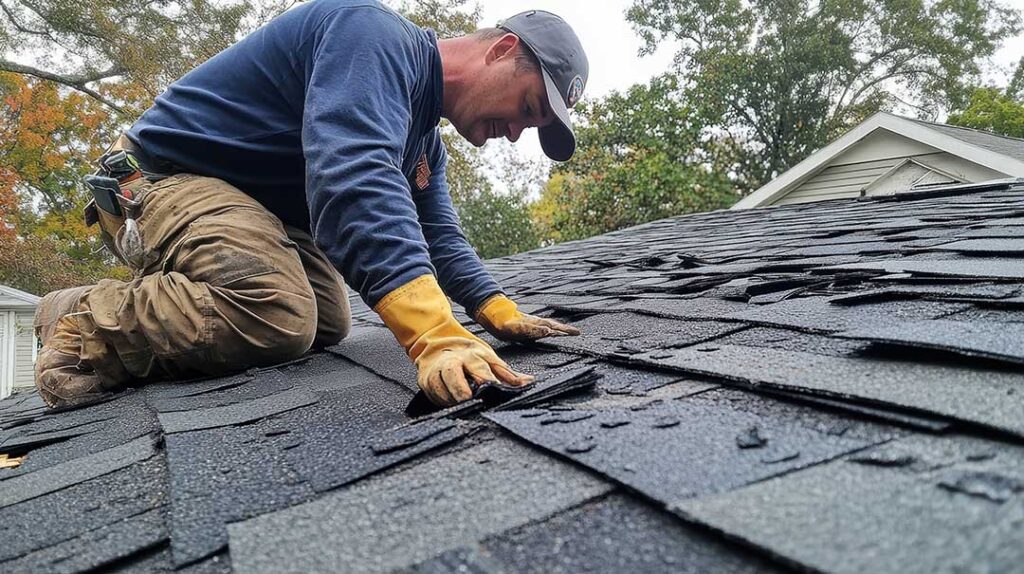
Shingles protect the roof deck from direct exposure to rain and melting snow. When shingles crack, curl, blister, loosen, or go missing, water can reach the layers underneath.
Damage may result from:
- Wind lifting the edges of shingles
- Hail or falling branches
- Foot traffic or improper maintenance work
- Long-term exposure to sunlight and changing temperatures
- Aging materials that have become brittle
A few missing shingles can allow water into the roof system, especially during wind-driven rain. Small areas of damage are easy to overlook from the ground, and a roof may still appear generally intact while having several vulnerable spots.
Granules collecting in gutters can also signal shingle wear. Granules naturally shed as roofing materials age, but an unusual increase may indicate that the protective surface is deteriorating.
Why is flashing a frequent source of leaks?
Flashing is the thin, water-resistant material installed where roof surfaces meet walls, chimneys, vents, valleys, and other transitions. These areas are vulnerable because water changes direction and can collect or flow more forcefully there.
Flashing can leak when it is:
- Bent, corroded, cracked, or displaced
- Installed with gaps or inadequate overlap
- Loosened by wind or repeated temperature changes
- Covered with deteriorated sealant
- Damaged during other roof or exterior work
The flashing around a chimney deserves particular attention. Masonry can absorb water, and the joint where the chimney meets the roof must remain properly sealed. A leak near a chimney may involve the flashing, the masonry, the chimney cap, or more than one of these components.
Can clogged gutters and downspouts make a roof leak?
Yes. Gutters do not usually cause a roof covering to fail by themselves, but poor drainage can direct water into places where it should not go.
Leaves, twigs, roofing granules, and ice can restrict water flow. When gutters overflow, water may run behind the gutter, against fascia boards, or down exterior walls. In some roof designs, backed-up water can also reach the lower edge of the roofing system.
Ice buildup can create another drainage problem during freezing weather. If melting snow cannot move off the roof normally, water may refreeze near the eaves and work beneath roofing materials. This condition is often called an ice dam.
Homes surrounded by mature trees may need more frequent attention to roof drainage, especially after autumn leaf drop and strong storms.
How does roof age contribute to water intrusion?
Roofing materials gradually lose flexibility, surface protection, and resistance to weather. An older roof may develop leaks even without one obvious puncture or missing shingle.
Age-related problems can include:
- Cracked or brittle shingles
- Failed fasteners
- Deteriorated underlayment
- Worn flashing sealants
- Sagging or weakened roof decking
- Repeated repairs in multiple areas
A roof’s service life depends on its materials, installation quality, ventilation, slope, exposure, and maintenance history. Two roofs of the same age may not perform the same way. Heavy snow, wind exposure, shade, and poor drainage can accelerate deterioration.

What roof features commonly leak?
Every opening or interruption in a roof creates a potential path for water. Common trouble spots include plumbing vents, bathroom exhaust vents, attic vents, skylights, satellite or antenna mounts, and roof-mounted equipment.
Leaks around vents often result from cracked boots, loose flashing, or failed seals. A plumbing vent may look intact from the ground while its flexible seal or surrounding flashing has deteriorated.
Skylights can leak because of damaged flashing, failed gaskets, condensation, or problems with the surrounding roofing materials. The glass or frame is not always the source.
Roof penetrations should be inspected carefully after major storms and whenever a ceiling stain appears nearby. Adding caulk over an existing leak may provide only temporary improvement if the underlying flashing or material remains damaged.
Can attic ventilation problems cause roof leaks?
Poor ventilation does not always create a direct opening in the roof, but it can contribute to conditions that shorten roof life. Warm, moist air from the living space may enter the attic through gaps around light fixtures, ductwork, access panels, or plumbing penetrations.
If that moisture condenses on cold roof surfaces, it can dampen insulation and wood, encourage mold growth, and create stains that resemble a roof leak. In winter, inadequate ventilation may also increase the risk of ice buildup along the roof edge.
The source may be difficult to distinguish because condensation can appear during cold weather even when rain or melting snow is not present. Attic moisture problems require attention to both ventilation and air sealing rather than simply adding more roof sealant.
Why do leaks sometimes appear after a storm?
Storms can expose weaknesses that were already developing. Wind may lift shingles, drive rain under exposed edges, damage flashing, or break branches that puncture the roof. Heavy rain may also reveal drainage problems that were not noticeable during ordinary weather.
A storm-related leak may not appear immediately. Insulation and roof decking can absorb water before moisture reaches a ceiling or wall. Stains may become visible hours or days later.
After severe weather, exterior warning signs include:
- Shingles on the ground
- Bent or exposed flashing
- Broken branches on the roof
- Sagging gutters
- New water stains in the attic or upper floors
- Damp insulation or a musty odor
Climbing onto a wet, icy, or damaged roof is hazardous. Interior observation from a safe location is preferable, and electrical fixtures near water stains should be treated cautiously.
What should residents check when a ceiling stain appears?
First, determine whether the stain is growing, whether active dripping is present, and whether the area is near a light fixture or electrical wiring. Place a container under a drip and move furniture away from the affected area if it can be done safely.
If attic access is available, look for damp insulation, darkened wood, water trails, or daylight visible through the roof deck. Avoid stepping between ceiling joists or on unsupported areas.
A ceiling stain should not be painted over until the moisture source has been identified and the affected materials have dried. Painting may hide the discoloration temporarily while allowing a continuing leak to damage insulation, wood, drywall, or interior finishes.
The most reliable diagnosis considers the whole water path: the interior stain, the attic evidence, the roof surface, nearby flashing, and the way water drains during rain or snowmelt. In many cases, the visible symptom is only the final point in a longer path that began higher on the roof.
