
What are the first signs of roof damage?
The earliest roof problems are often subtle: a few loose shingles, a small ceiling stain, or granules collecting near a downspout. Identifying these changes early can help prevent water from reaching insulation, framing, drywall, and other parts of the home.
For residents of Ontario, NY, roof inspections are especially useful after periods of heavy rain, strong wind, freezing temperatures, snow, and repeated thawing. Weather does not need to create a dramatic leak to weaken roofing materials. Small defects can gradually become larger problems if they are overlooked.
What should be checked from the ground?
A ground-level inspection can reveal several warning signs without requiring anyone to climb onto the roof. Use binoculars if necessary, and look from multiple sides of the house.
Watch for:
- Shingles that are missing, lifted, curled, cracked, or visibly darker than surrounding shingles
- Uneven roof areas that appear wavy, sagging, or depressed
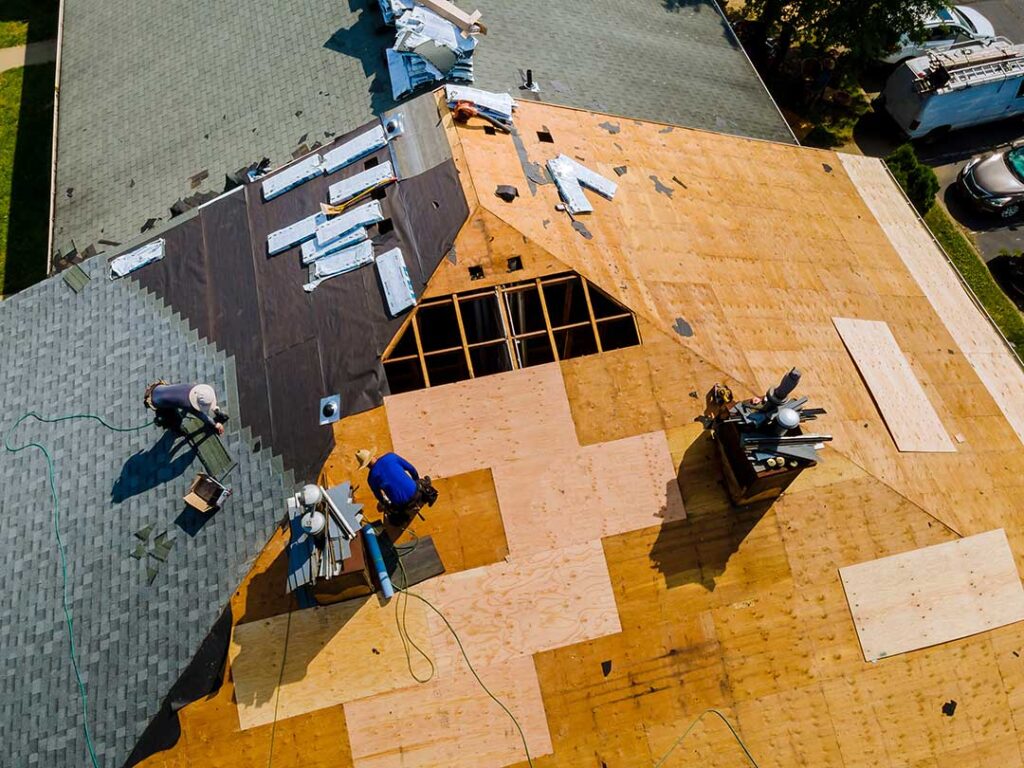
- Exposed underlayment or roof decking
- Metal flashing that appears loose, bent, separated, or heavily rusted
- Moss, algae, or organic growth covering portions of the roof
- Granules collecting beneath downspouts or along the edges of the house
- Gaps around roof vents, chimneys, skylights, or other roof openings
- Damaged or displaced sections after a windstorm
A few streaks or small patches of discoloration may be cosmetic, but extensive growth can hold moisture against roofing materials. Sagging is more concerning because it may indicate trapped water, deteriorated decking, or a structural problem.
Do not climb onto a roof that is wet, icy, steep, damaged, or difficult to access. A ground-level review is useful, but it cannot show every condition.
How can the attic reveal a roof problem?
The attic is often the first interior area to show evidence of a roof leak. Inspect it during daylight and, if possible, after rain. A flashlight can help reveal stains and changes in the wood.
Look for:
- Dark water marks on rafters, roof decking, or insulation
- Damp insulation or compressed insulation
- A musty odor that does not have another clear source
- Mold-like growth on wood surfaces
- Rust around nails, fasteners, or metal components
- Daylight visible through the roof boards
- Wet spots that appear below valleys, roof penetrations, or flashing
Water does not always drip straight down from the location where it enters. It can travel along decking, rafters, insulation, or other materials before appearing inside the home. For that reason, a ceiling stain may not be directly below the damaged shingle.
A dry attic does not guarantee that the roof is free of damage. Some leaks occur only during wind-driven rain, melting snow, or specific weather conditions.
Which indoor signs should not be ignored?
Interior symptoms can appear long after the original roof damage began. A stain that seems small may still indicate moisture above the ceiling.
Pay attention to:
- Brown, yellow, or gray ceiling stains
- Peeling paint or bubbling drywall
- Damp areas near exterior walls or upper-floor ceilings
- Water around recessed lights, vents, or ceiling fixtures
- Dripping or dampness during rain
- Persistent musty odors
- Doors or windows that begin sticking near a previously dry area
Water near electrical fixtures requires extra caution. Do not touch wet electrical components or attempt to investigate around them while power is active. If water is entering near a light, outlet, or wiring, turn off the affected circuit only if it can be done safely and keep clear of the area until the hazard is addressed.
Can gutters and downspouts show roof damage?
Yes. Gutters often collect evidence from the roof system, particularly after shingle aging or storm damage.
A small amount of loose granule material can occur on newer asphalt shingles, but repeated or heavy accumulation may indicate surface wear. Granules help protect shingles from sunlight and weather, so extensive loss can shorten the remaining service life of the roof.
Also check whether:
- Gutters contain pieces of shingle material
- Downspouts discharge dark, gritty runoff
- Water overflows during ordinary rainfall
- Gutters are pulling away from the roof edge
- Water is pooling near the foundation
- Ice buildup has occurred along the roof edge during winter
Gutter problems do not always originate with the roof. Leaves, poor slope, blocked downspouts, or damaged gutter sections can also cause overflow. Still, gutter debris and roof-edge damage are useful clues that deserve further inspection.
What damage can winter weather cause?
Freeze-thaw cycles can enlarge small cracks and loosen roofing materials. Water enters a minor opening, freezes, expands, and places pressure on nearby materials. Repeated cycles may worsen flashing, sealants, shingles, and roof edges.
Snow and ice can also contribute to:
- Broken or shifted shingles
- Damaged flashing
- Ice buildup near eaves and valleys
- Moisture entering around roof penetrations
- Gutter distortion
- Hidden attic moisture from poor ventilation or melting snow
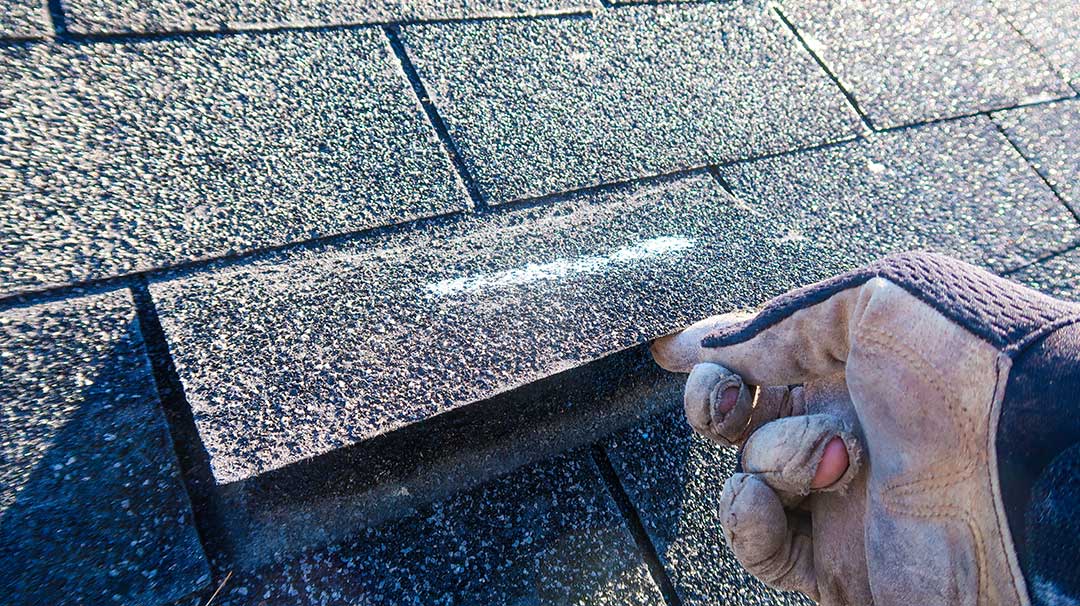
After winter, inspect areas where snow tends to collect or where ice has repeatedly formed. A roof may appear intact from the ground while flashing or underlayment has already been compromised.
Does every missing shingle mean there is a major leak?
Not necessarily, but a missing shingle should not be ignored. The exposed area beneath it may allow water to reach the underlayment or roof decking, especially during wind-driven rain.
The risk depends on several factors:
- How long the area has been exposed
- Whether the underlayment remains intact
- The condition and age of nearby shingles
- The roof slope and location of the missing piece
- Whether the damage is near a valley, edge, vent, or flashing detail
A single displaced shingle may be an isolated repair. Several missing or lifted shingles can indicate broader wind damage or aging across the roof surface.
How can homeowners tell normal aging from urgent damage?
Roofing materials naturally change over time. Mild color variation, limited surface weathering, and small amounts of granule loss may occur as a roof ages. Urgent concerns include active leaks, sagging, exposed decking, large areas of missing shingles, or damage near structural and electrical components.
Prompt attention is warranted when:
- Water is actively entering the home
- The ceiling is bulging or holding visible water
- Roof decking appears soft or deteriorated
- A large section of roofing has lifted
- A tree limb or other object has struck the roof
- The roof has visible sagging
- Mold or extensive dampness is present in the attic
Temporary measures should be handled carefully. Walking on damaged roofing, placing a ladder against unstable gutters, or covering a wet area without understanding drainage can create additional hazards. Tarps and emergency coverings can also become dangerous in wind.
How often should a roof be checked?
A practical schedule is to inspect the roof system twice a year—typically in spring and fall—and after severe weather. The review should include the roof surface, attic, ceilings, gutters, flashing, and areas around vents.
Keep brief records of:
- The date of each inspection
- New stains or changes in existing stains
- Missing or damaged materials
- Granules or debris in gutters
- Areas where water has pooled
- Repairs or temporary coverings already made
This record can help distinguish a new problem from an old stain and may reveal whether an issue is expanding.
The safest approach is to observe from the ground or from accessible interior areas. Roof surfaces can be slippery, fragile, and hazardous, particularly after rain, snow, ice, or wind damage. Conditions involving active leaks, structural weakness, electrical hazards, or difficult roof access may require qualified assistance for safe evaluation.
